Hand it the quarter.
Keep the decisions.
Commission runs your engineering work with AI agents — and proves it is done.
What you see
You hear from it when it matters.
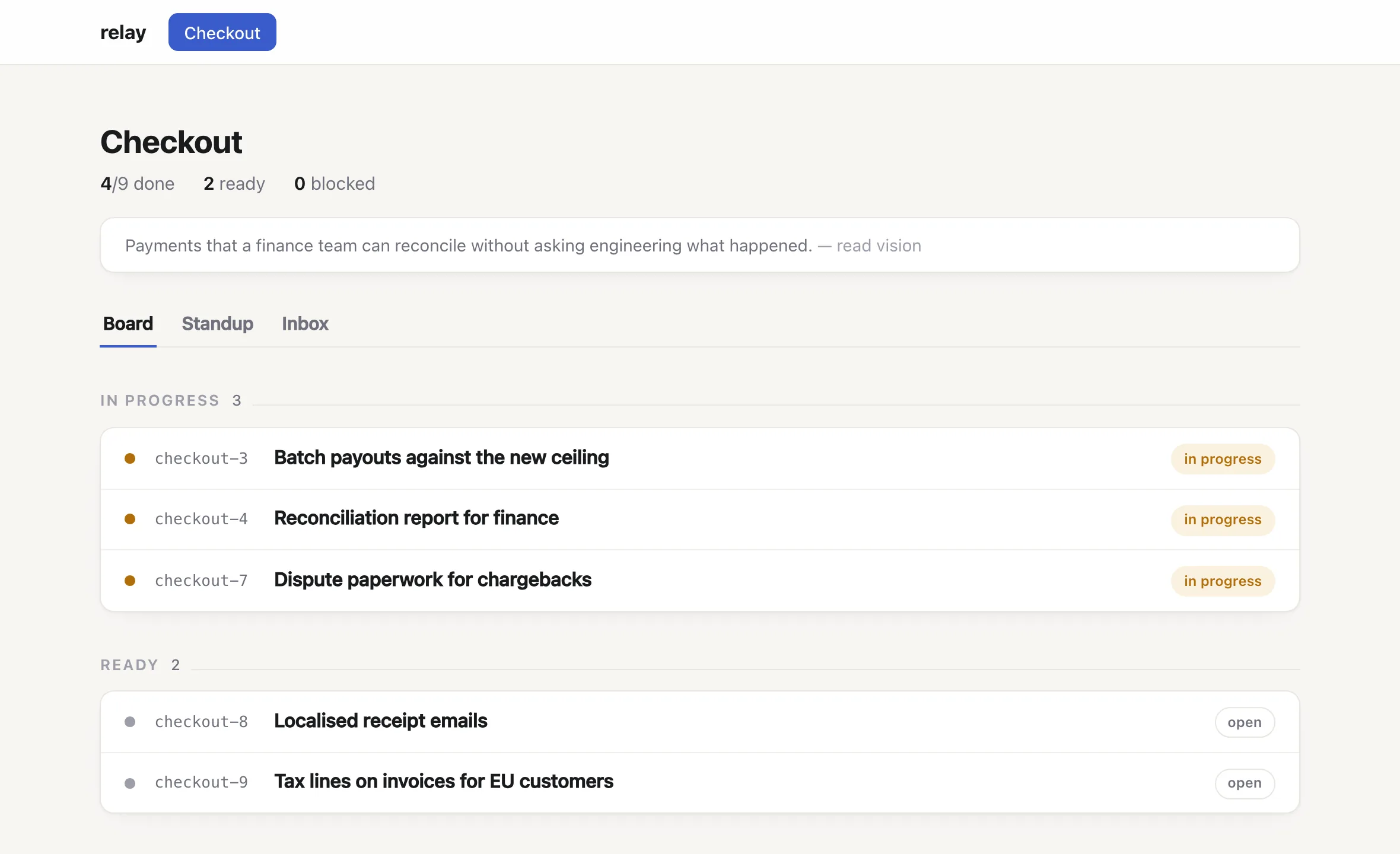
Agents work through the plan on their own. What reaches you is a short list of calls only a person can make — and what it costs to leave each one.
4 things need your judgment in checkout — 2 approvals, 1 finished task to accept, 1 task only you can move
- blocking Raise the single-payout ceiling to $50,000 checkout-2
2 tasks stay blocked behind checkout-2 for as long as it sits
- approve Partial refunds on split payments checkout-1
it stays finished but unaccepted, and cannot close
- approve Refund path for the new card processor checkout-5
it stays finished but unaccepted, and cannot close
- accept Retire the legacy webhook endpoint checkout-6
it sits in review and never counts as done
nothing needs you in checkout — 3 tasks are in flight, 2 ready to pick up — once you have dealt with them.
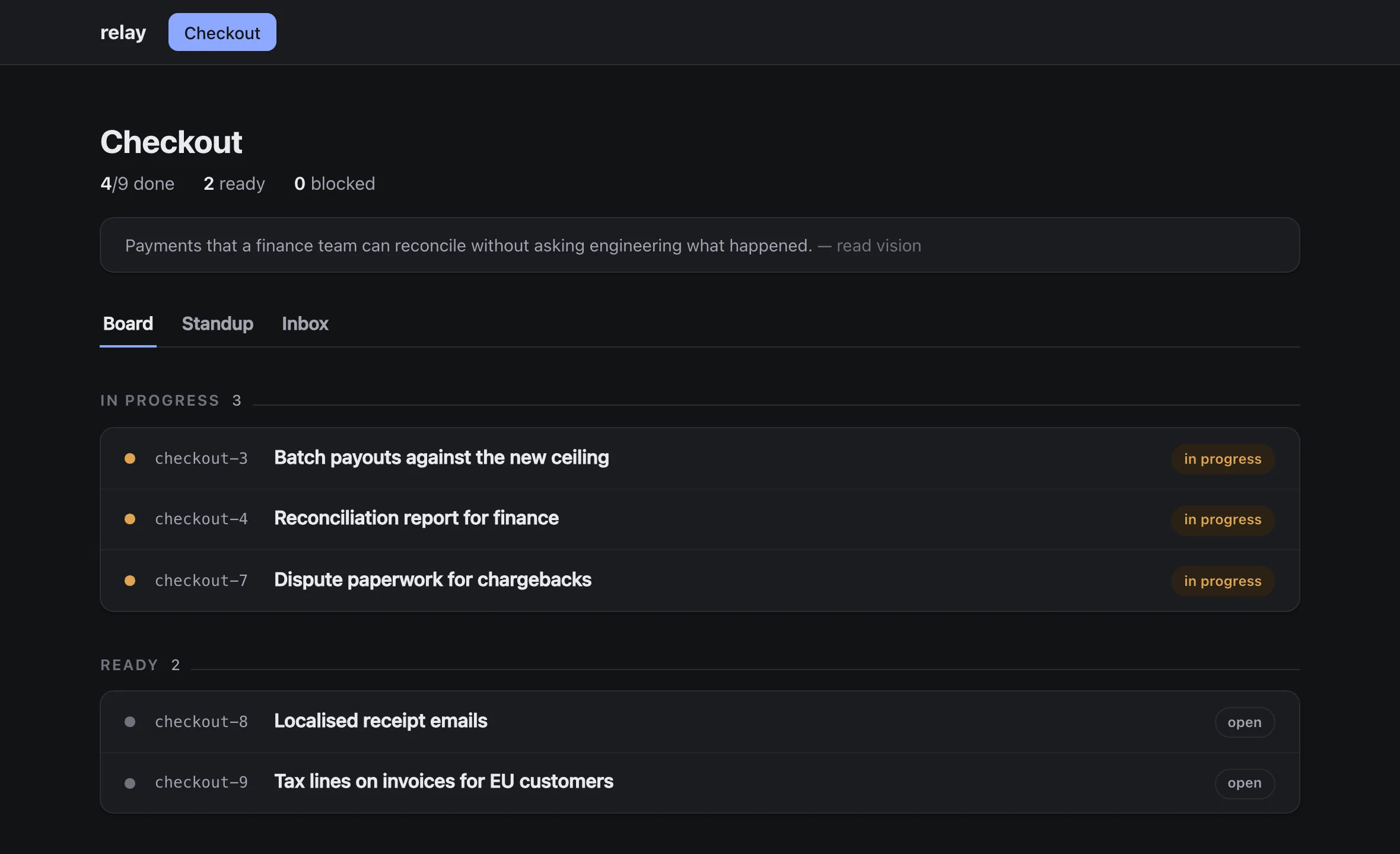
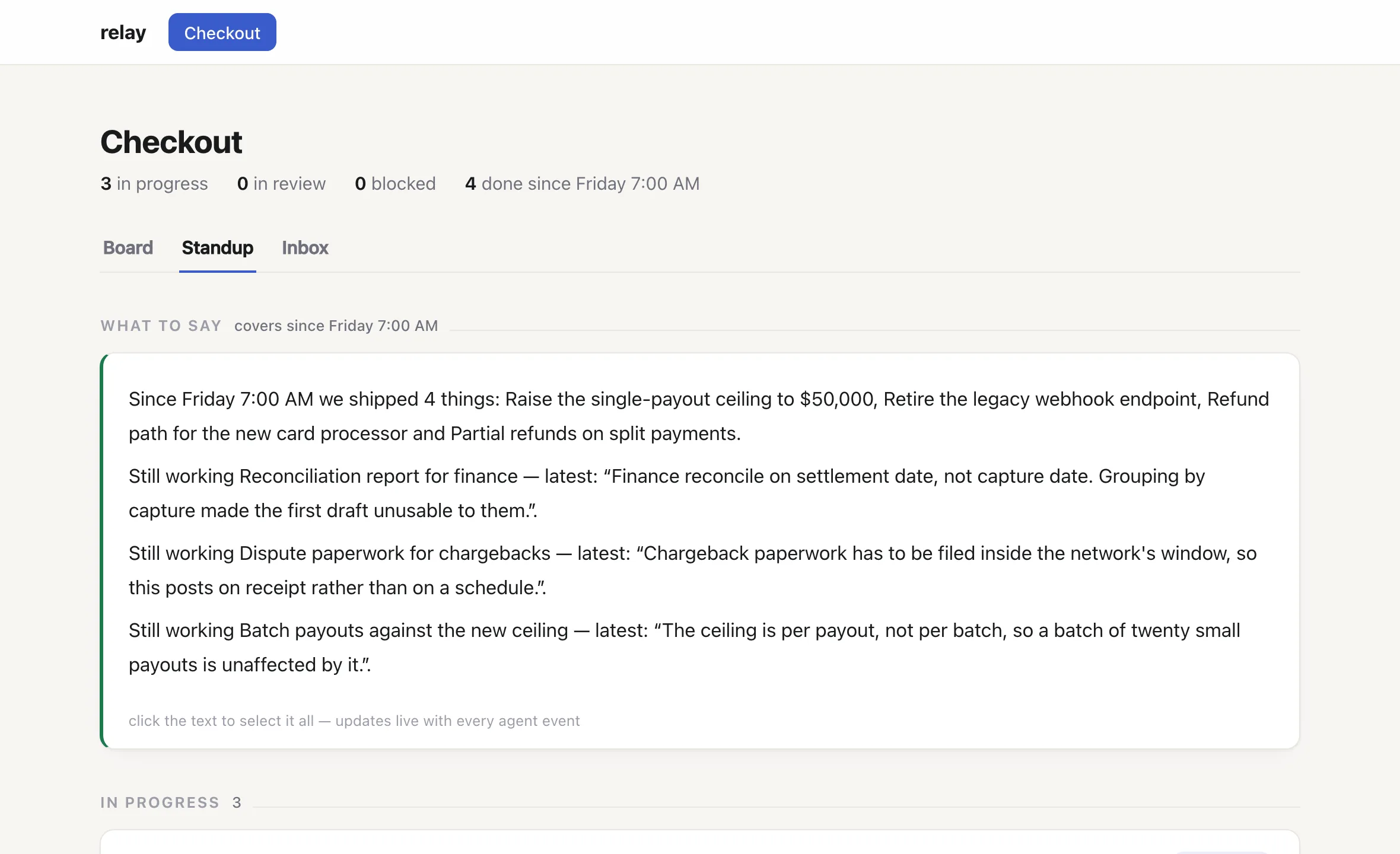
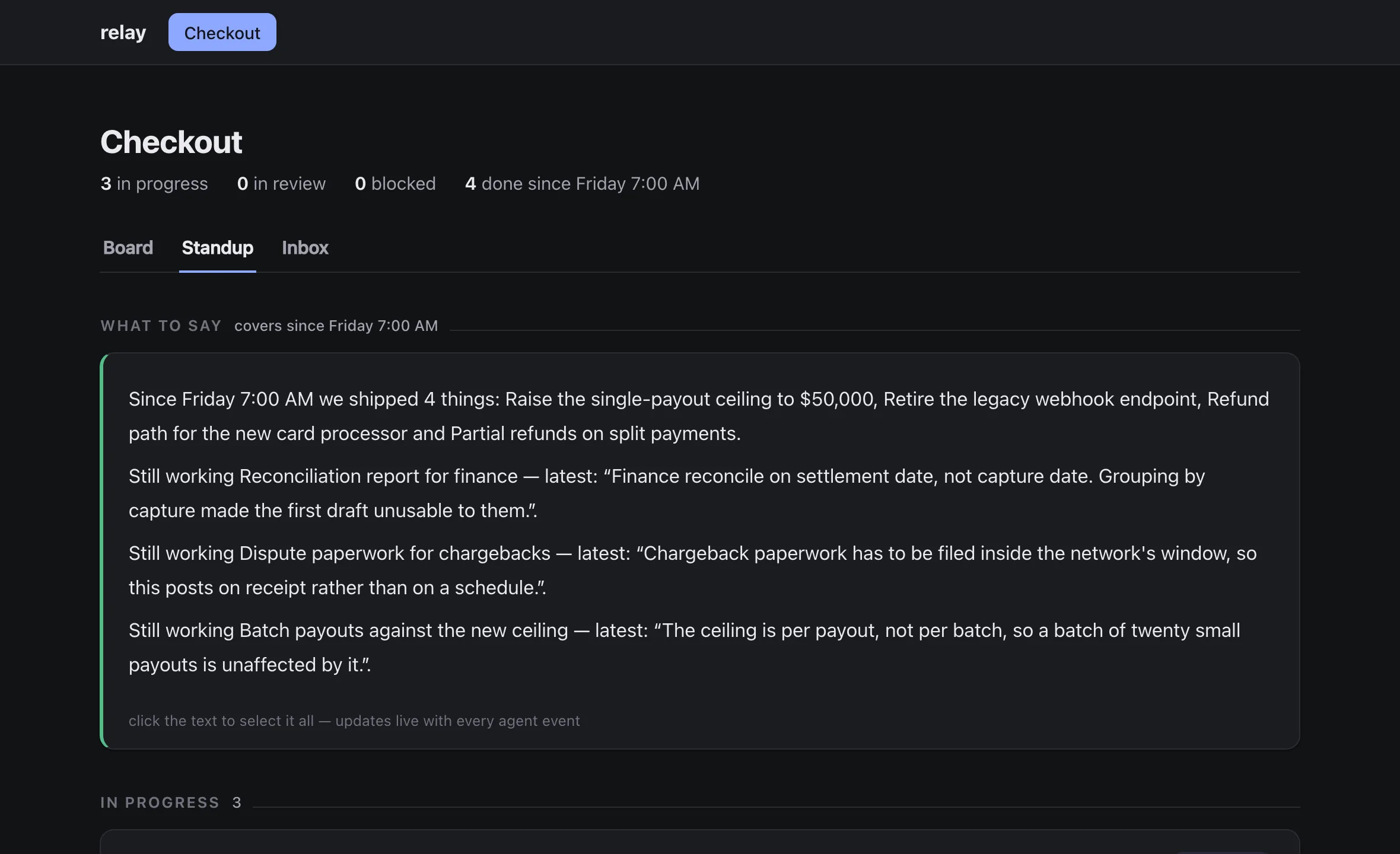
Real output from a real project. Every line above was written by Commission, not by this page.
How it works
Three things happen.
-
01
You describe what you want built
A quarter of work goes in once: what has to be true, in what order, and what counts as finished.
-
02
Agents do the work, in parallel
However many you run, none of them collide and none of them lose the thread between sessions.
-
03
Nothing is finished until it is proved
Work only closes when the proof it needs exists. An agent cannot decide it is done.
Why Commission
Not a tracker. Not another agent.
Commission sits underneath both. You keep your editor, your agent, your CI and your Jira.
- What you want built
- Your agents
- Your repository
- GitHub and your CI
- Jira, right where it is
- You — when it matters
- Unlike a tracker
- A tracker records what someone says happened. Commission decides what happens next, and can disagree when an agent says it is finished.
- Unlike a coding agent
- An agent forgets everything between sessions. Commission keeps what was decided, what was tried and rejected, and what still has to be true.
- Unlike more process
- No estimates, no points, no sprints, no status meeting. The board and the standup are read out of the work itself.
Honestly: if you run one agent, read every diff yourself, and rarely pick work back up days later, you do not need this yet. It starts paying the moment more than one thing is running at once.
Proof
Commission was built this way.
Not a demo. Commission’s own release was handed to agents working through Commission, and the numbers below are read out of that project’s own history rather than written into this page.
- of 72 pieces of work, finished
- 50
- agents building at the same moment
- 6
- pieces of proof attached, not asserted
- 122
- days, start to here
- 10
One person was still in it — and that is the product, not a caveat. They wrote 13% of the record: the calls about what to build first, what to change course on, and the one finished piece of work they sent back because an agent had judged it wrong.
Read out of the real project by a committed script, never written by hand.
Who it is for
Who it is for.
- Founders
- Run five agents on your product and still know, at any moment, exactly what is true.
- Engineering teams
- Get the parts of process that prevent disasters, and none of the parts that slow you down.
- Larger organisations
- Let agents do real work inside your existing systems without giving up control or a paper trail.
The ledger
What exists, and what does not.
Describing unbuilt software is marketing. Everything on the right names the piece of work that would make it true.
Working today
- Plan a quarter as one document, in one go
- Any number of agents working at once, without collisions
- Work that only closes when the proof it needs exists
- A short queue of the decisions that need a person
- A board and a standup, read straight out of the work
- Everything that happened, attributed and permanent
- Sign-off that an agent is not allowed to give itself
- Rules for what only a person may touch
- A prepared, isolated place for each piece of work
- Jira, GitHub and your CI left exactly where they are
Not yet
- Agents asking you a question instead of guessing relay-44
- Approving work from the web view itself relay-45
- Ready-made downloads instead of building it yourself relay-52
- Documentation, guides and adoption paths relay-60
- Pricing and a public roadmap relay-66
Nothing on the right is described anywhere on this page as though it already worked.
Pricing
You pay for people. Not for agents.
Commission is licensed per person with access. However many agents you run, and however hard you run them, they are never counted — you pay for the people making the decisions, not for the machines doing the work.
-
Team
$25
per person, per month
The same product, hosted and shared, so a second person and a remote agent can reach the same record.
planned · relay-6, relay-33
-
Business
$75
per person, per month
Hosted, with the controls a security review asks for and the paper trail an auditor asks for.
planned · relay-33
-
Enterprise
Quote
annual
Run it on your own machines, with a contract behind it and a person on the other end.
planned · relay-51, relay-52, relay-57
Nothing is open for purchase yet — each price names the work it is waiting on.
Where this stands
It is early.
There is nothing to run and nothing to host: Commission is one file on your own machine. There is also no download yet, and the repository is not public while the licence is being decided. planned · relay-52, relay-57
Which means no price and no plans on this page either, because neither has been decided. If you are looking at Commission now, you are looking at it early — and a page arguing that nothing counts as finished until it is proved should be the first to say so.
For developers
If you are the one evaluating it.
There is a second page for you: how the whole thing works, what it declines to do and why, the data model, and real transcripts of every part of it running. Dense, complete, and checked against the source.
Technical reference Writing Documentation
Commission is one program and one file on disk. It contains no model, runs no code of yours, and starts no agents — you bring those, and it makes running several of them at once safe.
Where this leaves you
Hand it the quarter.
Keep the decisions.
Nothing to host and nothing to run. It is early, it is honest about what it cannot do yet, and everything it claims here is checkable.